What's the Real Difference Between PRINCE2 and Agile?
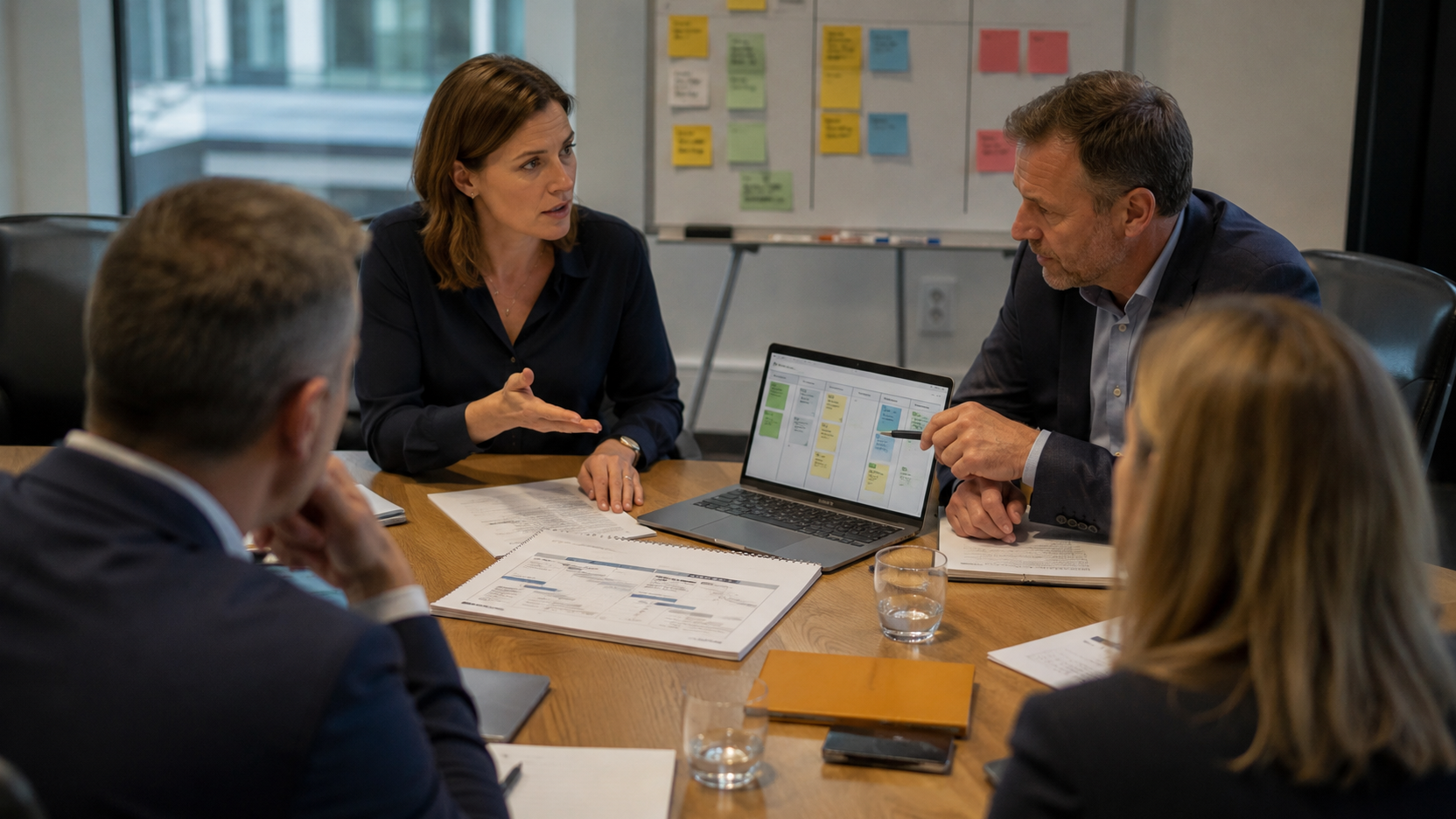
Ask ten project managers what separates PRINCE2 from Agile and you will get ten versions of the same answer. PRINCE2 is rigid, Agile is flexible. PRINCE2 is paperwork, Agile is delivery. One belongs to a world of sign-offs and stage gates, the other to sprints and stand-ups, and the two are somehow meant to be in competition with each other, as though a project manager has to pick a side and defend it.
That framing has been repeated so often it has started to sound like fact. It isn't quite right, and the gap between what people say and what actually happens on delivery is where a lot of PMs get caught out, usually somewhere in their second or third year, once they've been handed a project that doesn't fit the shape they were trained for.
Here is where the confusion tends to start. PRINCE2 is a governance method. It exists to answer a specific question: how does an organisation know a project is still worth doing, and who is accountable if it isn't? That question doesn't go away just because a team is working in two-week sprints instead of a Gantt chart. Somebody still has to decide whether to keep funding the thing, still has to know when to stop it, still has to be able to say who signed off on what and when. PRINCE2 answers that question through stages, tolerances, and a business case that gets checked at defined points rather than assumed to still be true.
Agile, by contrast, isn't really answering a governance question at all. It's answering a delivery question: how do you build the right thing when you don't fully know what the right thing is at the start? That's a completely different problem. A construction project with a fixed design and a signed contract doesn't have much uncertainty about what's being built, so the delivery question is largely solved before work begins. A product team building a new feature for users whose behaviour nobody can predict yet has the opposite problem. They know roughly what outcome they're chasing but not the exact form it will take, and rigid up-front planning in that context isn't disciplined, it's just wrong, because the plan is built on assumptions nobody has tested.
This is the part most comparisons miss entirely. PRINCE2 and Agile aren't sitting on the same axis. One governs, the other delivers. A project can be governed under PRINCE2 stage boundaries while the actual build happens through Agile iterations underneath, and organisations that get this right stop treating it as a compromise between two philosophies and start treating it as two tools solving two separate problems in the same project.
A composite illustration makes this concrete. Picture a mid-sized public sector programme replacing a case management system. The steering group, structured entirely along PRINCE2 lines, meets at each stage boundary to review whether the business case still holds, whether the budget tolerance is intact, whether the risk profile has shifted enough to warrant escalation. Underneath that structure, the delivery team is running two-week sprints, adjusting priorities as user testing reveals which workflows actually matter to caseworkers. The steering group doesn't need to know the sprint backlog in detail. The delivery team doesn't need to justify the business case at every stand-up. Each layer is answering the question it's built to answer, and the friction that normally shows up between "the business side" and "the delivery side" mostly disappears, because nobody is trying to force one method to do the other's job.
Where this breaks down is when an organisation picks a method as an identity rather than a tool. A team that adopts Agile because it sounds modern, without keeping any governance layer above it, tends to lose track of whether the project is still worth funding until the money has already run out. A team that runs PRINCE2 with no delivery flexibility underneath tends to produce a beautifully documented project that ships the wrong thing, because nobody built in a mechanism to test assumptions before committing months of work to them. Neither failure is really about the method. Both are about mismatching the tool to the actual uncertainty in front of them.
None of this means the two frameworks blend into some vague third way. PRINCE2 practitioners and Agile practitioners are trained in genuinely different disciplines, with different vocabularies, different assumptions, and different instincts about what "on track" even means. The skill isn't dissolving that distinction. It's knowing which question you're actually answering at any given moment, and being fluent enough in both disciplines to move between them without losing your footing. That's a rarer capability than most training routes admit, and it's usually the gap between a PM who can recite both frameworks and one who can actually run a hybrid environment without it falling apart at the seams.
If you're trying to work out where your own experience sits against that gap, or which combination of governance and delivery training would actually close it, get in touch about your training options.
Andre Malowney is a project management trainer accredited across PMI, APMG, APM and PeopleCert frameworks, working with both traditional plan-driven practitioners and Agile delivery teams. Find him on LinkedIn: www.linkedin.com/in/andremalowney.