Sustainability vs Schedule: When Faster Is Not Better
The request almost never arrives as a sustainability question. It arrives as a date. The building has to be open before the autumn term, the platform live before the trading year, the plant back in service before the outage window closes, and the question on the table is what can be compressed. Somewhere in the list of things that can be compressed sit two or three choices that will still be running, costing money and consuming energy long after the project team has been disbanded.
The useful question is narrower than whether sustainability is worth the trouble. It is whether the weeks being saved are being bought with a consequence that outlasts the project, and whether anyone has put a number on that consequence before the decision is made. Faster is not better when the saving lands in the project's schedule and the bill lands in somebody else's operating budget for the next fifteen years.
Which acceleration levers have a tail
Most schedule compression carries no sustainability consequence at all. Additional shifts, earlier mobilisation, resequencing, bringing a design review forward, splitting a workstream in two and accepting more coordination effort: these cost money, attention and management risk, and they stop costing anything when the project stops. A project manager who resists them on environmental grounds is usually arguing about the wrong thing.
A smaller group of levers changes what the organisation is left holding. Substituting a specified component for whatever the supplier has in stock. Moving a shipment from sea freight to air. Choosing the manufacturer with capacity over the one with a credible supply chain. Dropping the commissioning and optimisation period so the system goes live on default settings and quietly stays there for a decade. Cutting the part of the fit-out that would have made the building cheaper to run. Each of these buys time with a decision nobody will be around to revisit.
Sorting the two groups is the first practical move, and it is often enough on its own. A surprising number of sustainability arguments dissolve once someone checks where the recoverable weeks actually come from, because the cheapest weeks usually come from the harmless group and nobody had looked.
Reading the tail before you trade it
Four questions get you most of the way. How long does the consequence last, measured against the length of the project? A decision that binds an asset for twenty years deserves more scrutiny than the project that installs it. Who owns the consequence once the project closes, and are they in the room? Is the choice reversible, and at what cost and disruption, because a component that can be upgraded during a planned refit in year five is a different proposition from one that is sealed into a structure. And is the time being saved genuine value to the organisation, or is it schedule comfort, a buffer being rebuilt after it was spent somewhere else?
This is the practical shape of what Section 3.7 of The Standard for Project Management describes when it treats sustainability as something integrated across project decisions instead of a compliance check bolted on near the end. Integration means the environmental and long-term consequences are visible at the moment the acceleration option is chosen, which is normally the only moment they can be influenced.
It also has to be said that sustainability does not automatically win. It sits alongside safety, legal obligation, value, feasibility and commitments already given to customers, and a project manager who treats every environmental consideration as a veto will find the argument has been decided without them the next time.
A faculty refurbishment and a term start
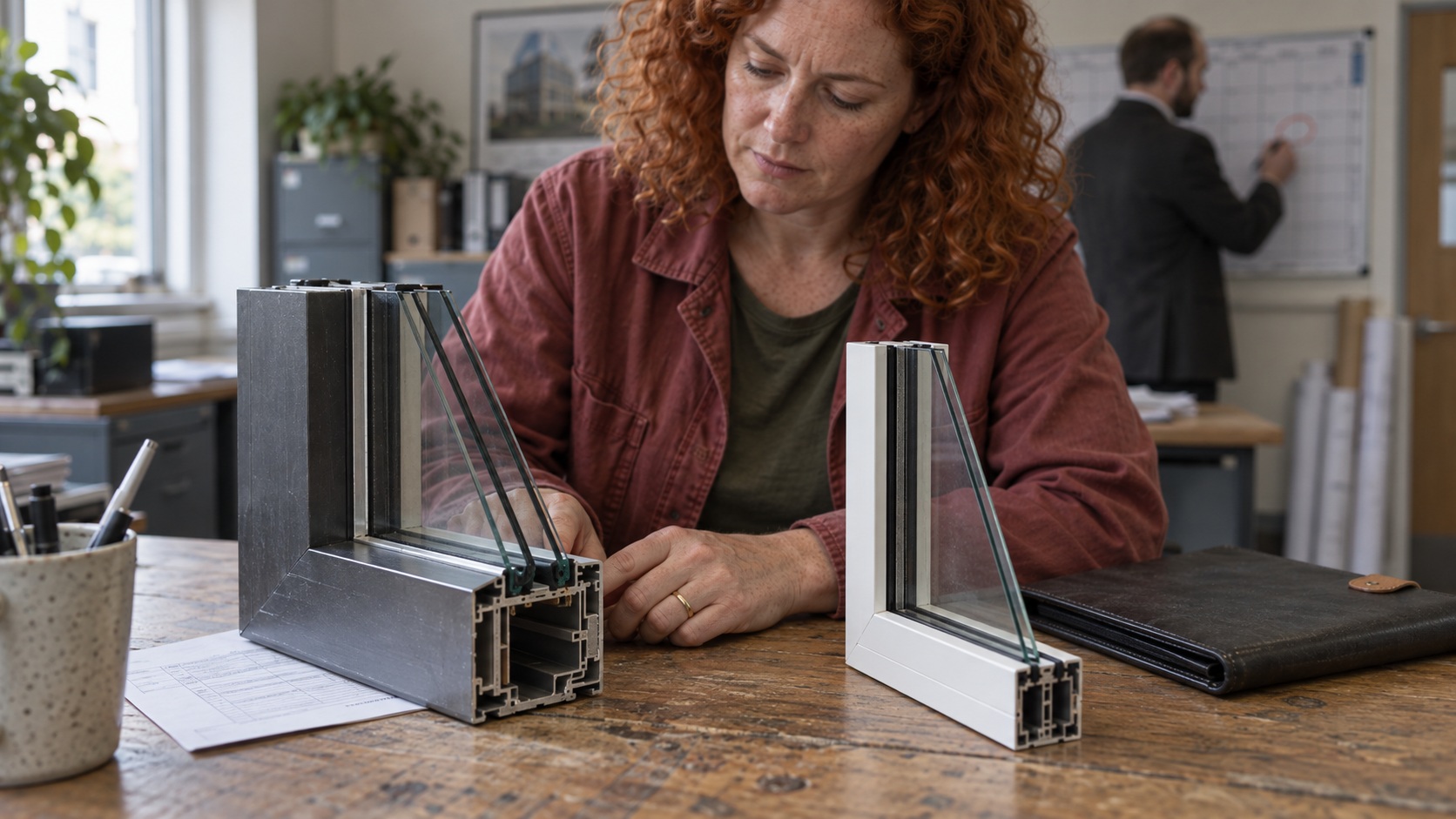
A university is refurbishing a 1970s faculty building. Handover has to be complete before the autumn term because the teaching space is already timetabled, and the timetable was published in March. Eight weeks into construction, the glazing supplier confirms that the specified high-performance units now carry a nine-week lead time. A lower-specification unit is available in three. The difference in heating demand runs across the remaining life of the facade, which the estates team expects to be around twenty-five years.
The heavier specification is not being rejected on its merits. It is being rejected because it arrives three weeks after the building has to open, and that is a different problem with different solutions. The glazing could be phased by elevation so the timetabled rooms are complete first and the remainder follows in the October break. The teaching floors could be handed over while the top floor stays under construction behind a temporary separation. Someone could establish whether the three weeks are real, or whether the supplier quoted a cautious date and the programme is carrying float that was already spent on an earlier delay. None of these options is available once the choice has been framed as a straight swap between a window and a date.
The other move is to get the person who will pay the heating bill into the conversation. The project budget does not carry the running cost; the estates department does, and their view of three weeks of disruption against twenty-five years of energy performance may be entirely different from the project sponsor's. Whatever is then decided, it is recorded as a decision with an owner and a rationale, so that the year-five refit programme knows why it inherited what it inherited.
Bringing the trade-off to the right table
The project manager's job here is not to make the call alone. It is to make the trade-off visible, quantified well enough to be argued about, and owned by whoever holds the authority for a consequence that extends past the project. Where the decision sits inside the team's remit, take it and log it. Where it commits the organisation beyond the project, crosses a compliance or policy threshold, or spends money that belongs to another budget holder, it escalates, and escalating a decision of that shape is not an admission that the project manager could not cope.
For a PMP candidate, this is worth recognising as a situation type rather than a values question. Sustainability appears in the current Examination Content Outline attached to enablers across the Process and Business Environment domains, in the areas of critical information requirements when planning delivery, cost of quality, compliance requirements and risk management. There is no sustainability domain and no stated proportion of sustainability questions, so the point is not to memorise a position. Scenario questions of this kind usually reward the answer that establishes the real constraint, identifies who owns the long-term consequence, and puts the decision in front of that person with the information they need. Working through that reasoning against other people's situations is where it becomes automatic, which is one reason Omega's PMP® Exam Preparation course spends its time on trade-offs in predictive, adaptive and hybrid settings instead of definitions.
On a live project the payoff is simpler. Schedule pressure is constant and most of it is answerable without anyone raising their voice about the environment. Knowing which handful of levers will still be costing the organisation money in 2045, and refusing to let those ones be pulled quietly in a progress meeting, is a small discipline that separates a project manager who delivered a date from one who delivered something worth having.
Interested in going further?
Trade-offs between schedule pressure and long-term consequence are exactly the kind of situation where PMP preparation earns its place, because the exam and the job both reward the project manager who identifies the real constraint and the right decision-maker before proposing a solution. Omega's course works through these decisions in predictive, agile and hybrid contexts with experienced practitioners.
The treatment of sustainability as an integrated consideration across project decisions sits in The Standard for Project Management within the PMBOK® Guide Eighth Edition, which is the fullest source behind the principle discussed here.
Ad · Amazon affiliate link.
References
A045: Sustainability in Project Management: What It Means in Practice
A046: Sustainability and the PMP Exam: What You Actually Need to Know
A047: Sustainability vs Cost: How Should a Project Manager Decide?
A055: The Stewardship Lens: Connecting AI, Sustainability and Ethics
A203: How to Handle Competing Constraints in a PMP Scenario
PMP and PMBOK are registered marks of the Project Management Institute, Inc.