What Is APMG Change Management Certification?
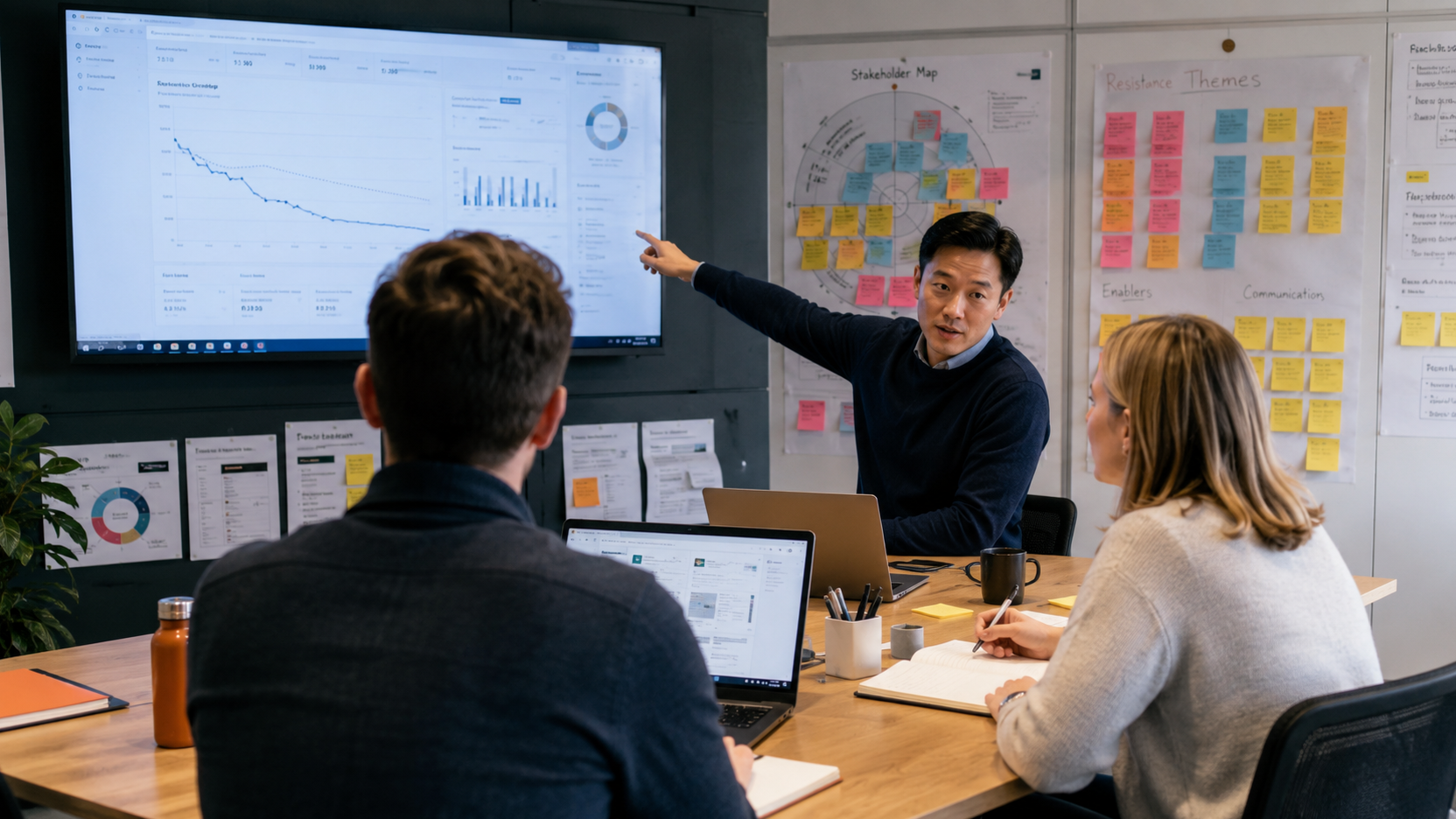
There is a particular kind of project review that every experienced PM has sat through. The milestones were hit. The budget held. The steering group signed off. And six months later, usage of whatever the project actually delivered is nowhere near where the business case said it would be. People have quietly gone back to the old spreadsheet, the old process, the workaround they trust.
Governance frameworks were never built to catch this. PRINCE2 tells you whether a project was controlled. MSP tells you whether a programme delivered its capabilities in the right order. Neither one asks whether the humans on the receiving end actually changed how they work, and that gap is where a lot of otherwise well-run projects quietly lose their return.
It is worth sitting with that for a moment, because the instinct in a governance-trained team is to assume the gap gets closed by better communication, or a stronger sponsor, or simply more time. Sometimes it does. More often, the resistance was predictable from the start and nobody had a structured way to see it coming, because nothing in the delivery framework was built to look for it. A risk register tracks threats to scope, cost and schedule. It was never designed to track whether the finance team trusts the new reporting process enough to stop keeping their own version on the side.
This is the specific gap the APMG Change Management certification addresses. It is developed by APMG International in partnership with the Change Management Institute, the global professional body for the discipline, and it is built around the mechanics of how individuals, teams and organisations actually respond to change, distinct from how a project or programme is governed.
The certification runs across two levels. Foundation has no prerequisites and is designed to give anyone involved in a change initiative, whether that is a project manager, a business analyst or someone simply affected by the change, a working grasp of the core models: how individuals move through transition, what drives resistance, how stakeholder engagement and communication actually function rather than how they look on a plan. The exam itself is fifty multiple-choice questions, closed book, forty minutes, with a straightforward fifty per cent pass mark. It is a genuinely accessible entry point, not a barrier disguised as a qualification.
Practitioner is a different proposition. It requires a Foundation pass first, and it tests something harder to fake: whether you can take those models and apply them to a real, messy change situation rather than just recognise them on a page. The exam is scenario-based, working from a case study, and delegates are allowed restricted access to their study materials while they work through it, because the point is not memory recall. The point is judgement under realistic conditions, closer to how the job actually feels than a Foundation-level knowledge check ever could be.
Both levels sit on the current v3 syllabus, developed with the Change Management Institute and refreshed to reflect current thinking on organisational change rather than a static model from a decade ago. That matters more than it might first appear. A lot of change management content still in circulation predates the shift toward treating adoption as something you actively manage and measure, rather than something you hope happens once the technical delivery is done.
None of this replaces PRINCE2, MSP or PMQ, and it was never designed to. A project still needs governance: someone has to own risk, control scope, and report progress in a way a sponsor can trust. But governance answers "was this delivered under control," and that is a genuinely different question from "did this actually change anything." A team fluent in only one of those two languages will keep producing projects that pass their gate reviews and still fail to land. The two disciplines are not competing for the same territory. They are answering different questions about the same piece of work, and a PM who can only answer one of them is only half-equipped for what the job actually requires.
If you want to talk through where a Change Management qualification would genuinely sit alongside what you already hold, rather than duplicate it, you can get in touch to talk through your options.
Andre Malowney is a project management trainer accredited across PMI, APMG, APM and PeopleCert frameworks, working with both traditional plan-driven practitioners and Agile delivery teams. Find him on LinkedIn: www.linkedin.com/in/andremalowney.