How Long Does It Take to Study for PRINCE2 Practitioner?
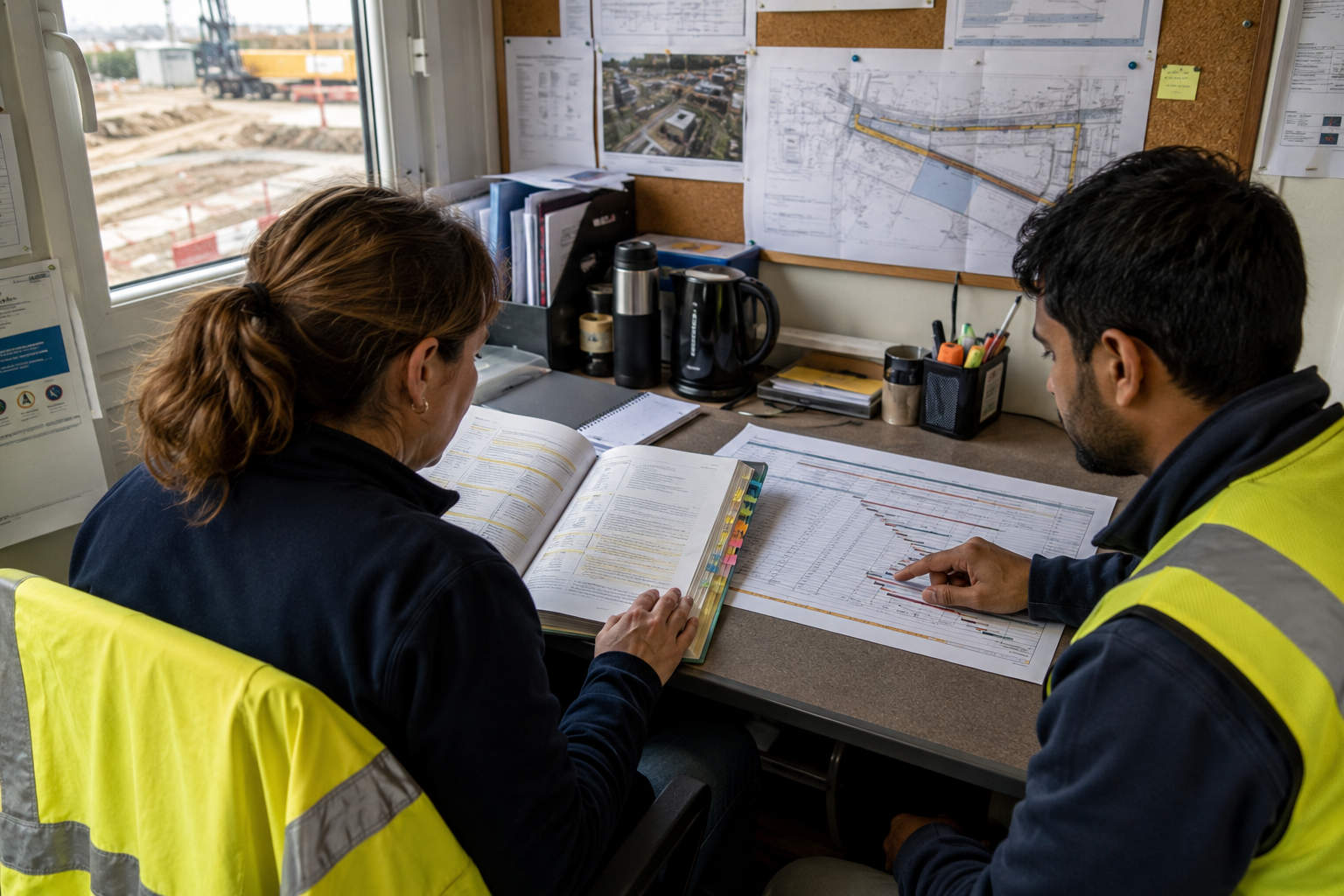
Ask three people who have passed PRINCE2 Practitioner how long they revised for, and you will get three different answers. One says a couple of focused weekends. Another says they blocked out six weeks and still felt rushed on the day. A third cannot really remember, because the exam felt like an extension of work they were already doing. All three passed. None of them were wrong about their own experience.
That spread is the actual answer to the question, and it is worth understanding why before reaching for a number.
Foundation and Practitioner are not the same kind of test, and treating study time as one continuous scale from the first to the second is where most estimates go wrong. Foundation checks whether you know the terminology and the shape of the method: the seven principles, the practices, the process model. Practitioner checks whether you can apply that method to a scenario you have never seen before, under time pressure, and defend the choices you make. That is a different skill, and it does not scale neatly from how long Foundation took you.
The current PRINCE2 7 Practitioner exam runs to seventy scenario-based questions in a hundred and fifty minutes, open book against the official manual, with a pass mark of sixty per cent. The weighting sits heavily toward practices, at just over half the paper, with processes making up around three in ten questions and principles and the people dimension splitting the remainder. Open book sounds like it should make revision lighter. In practice it changes what you are revising for. You are not memorising the manual. You are learning to find the right page inside two and a half minutes per question, while holding the scenario's specific constraints in your head.
That is where the real variance in study time comes from, and it has very little to do with intelligence or exam technique in the abstract sense. It has to do with how recently, and how often, you have actually used PRINCE2 on a live project.
Picture two people sitting the same cohort. One has spent the past eighteen months running PRINCE2-governed projects for a public sector client, writing exception reports, sitting on project boards, tailoring the method to fit a delivery that never quite matched the textbook version of it. The other passed Foundation two years ago as part of a broader qualification push, moved onto a run of Agile delivery work since, and has not opened a PRINCE2 manual since the Foundation exam. Both are competent project managers. Only one of them is going to recognise the shape of a Practitioner scenario question on sight, because the method is still live in their working memory rather than something they are reconstructing from notes.
For the first person, twenty to thirty hours of targeted revision is a realistic range: enough to drill the open book navigation, work through scenario-based practice questions, and tighten up the areas of the syllabus they use least in day to day work, typically the more procedural corners of the process model rather than the practices they lean on constantly. For the second, that same twenty hours will not be enough, not because they are behind but because part of what they are relearning is the method itself, not just exam mechanics. A more realistic range for that starting point sits closer to sixty to eighty hours, often spread across six to eight weeks alongside a normal working schedule, which is roughly the pace most structured training providers build their courses around.
Neither of these numbers is really about PRINCE2 difficulty. They are about currency. Someone who has never worked inside a PRINCE2 governance structure at all, and is coming to Practitioner cold shortly after Foundation, tends to sit closer to the lower end of the second range if they went into Foundation with genuine understanding rather than rote memorisation, because the two exams reinforce each other when they are taken close together. The people who struggle most are usually the ones who treat Foundation as a box to tick and then leave a long gap before attempting Practitioner, because the gap has to be closed twice: once for the concepts, and once for the application layer the second exam actually tests.
There is a practical way to work out which starting point you are closer to before committing to a study plan. Take a recent project you were involved in, real or recent enough to remember clearly, and try to map it onto two or three PRINCE2 practices without looking anything up. If you can describe how a business justification changed over the life of that project, or where a genuine exception would have needed escalating, in your own words, you are closer to the practitioner end of the spread. If those questions require you to picture the manual's structure rather than the project itself, you are closer to the person relearning the method from scratch, and your revision plan should be built around that honestly rather than around what worked for a colleague whose working context was different.
The question worth asking before booking an exam date is not really how many hours PRINCE2 Practitioner takes. It is how recently the method has been load-bearing in your actual work. Study time follows from that answer far more reliably than it follows from anyone else's revision schedule.
If you want an honest read on where your own starting point sits, and a study plan built around your actual delivery background rather than a generic timetable, get in touch about your PRINCE2 training options.
Andre Malowney is a project management trainer accredited across PMI, APMG, APM and PeopleCert frameworks, working with both traditional plan-driven practitioners and Agile delivery teams. Find him on LinkedIn: www.linkedin.com/in/andremalowney.