Value Delivery in Project Management: What It Means in Practice
Value delivery system is a phrase that sounds as though it came out of a consultancy deck, and the idea underneath it is plain enough. An organisation has an arrangement for turning intentions into things worth having. Strategy identifies what it wants. A portfolio decides which of the available options to fund. Programmes and projects build the things. Operations run them. Value turns up at the last step, which is the one the project manager is not present for.
The word system earns its place there, because it means the components are connected and a project is one of them. Two consequences follow, and both change how a project manager spends their attention.
Five components, and value appears at the end
Section 2 of The Standard for Project Management describes this whole arrangement rather than a project in isolation, and the five parts are worth naming because each holds something the project needs.
Strategy holds the reason. Somebody decided the organisation should move in a particular direction, and that intention is what the project ultimately serves. A project unable to connect itself to it is vulnerable in a way that has nothing to do with how well it is run.
The portfolio holds the choice. The project exists because it was selected over other things the same money could have funded, and that selection gets revisited periodically. A project's continuation is a portfolio decision, taken on criteria the project does not set.
The programme or the product holds the coordination, where one exists. A project contributing to something larger inherits dependencies, a sequence, and a set of benefits it only partly controls.
The project holds the delivery. This is the part a project manager owns outright, and it is one component out of five.
Operations hold the value. Whatever was built gets used, or does not, by people who were never in the project team and whose year has a shape of its own. Nothing the project produces is worth anything until this step, and this step sits entirely outside the project's authority.
Two relationships that decide a project's fate
Most of a project manager's relational effort goes sideways, into the delivery team, the contractors and the specialists. That is where the daily work is and where the effort feels most productive. The two relationships that determine what happens to the project run in the other directions, and both are routinely under-invested.
Upward is whoever can stop, refund or reprioritise the work. The thing worth understanding about this relationship is that it has little to do with performance. A well-run project can be stopped because a regulation changed, a franchise moved, an acquisition completed or a better use for the money appeared, and none of those is a judgement on the delivery. A project manager who treats a portfolio decision as an insult has misread the system. What the relationship buys is warning: somebody who speaks to the portfolio regularly hears about a review six weeks before the decision, and six weeks is long enough to influence it or to prepare for it.
Downward is whoever will operate the thing. This relationship buys the difference between an output and an outcome, and it is the one project managers most reliably leave too late, because the operating team has no role during construction and no obvious reason to be in the room. They have every reason to be in the room. They know what will not work, they hold constraints nobody wrote down, and after handover they decide whether the thing gets used.
Twenty metres of unmade ground
A rail infrastructure programme was renewing signalling across a section of line, delivered in two phases, the first covering about nine kilometres. The delivery was good. The commissioning weekend ran to plan, the section went into service on the Monday, and the client's programme director wrote to the team.
What followed lay outside the delivery team's influence, and part of it had been preventable.
The second phase was deferred by eighteen months. A franchise change altered the funding profile, the portfolio reviewed its commitments, and phase two moved. Nobody on the project had done anything wrong, and the programme manager learned about it in a letter, which is the part that could have been different. A working relationship with the portfolio team would have bought six weeks of warning and a chance to make the case for continuity, which was a real argument: demobilising and remobilising a signalling team costs considerably more than most people assume.
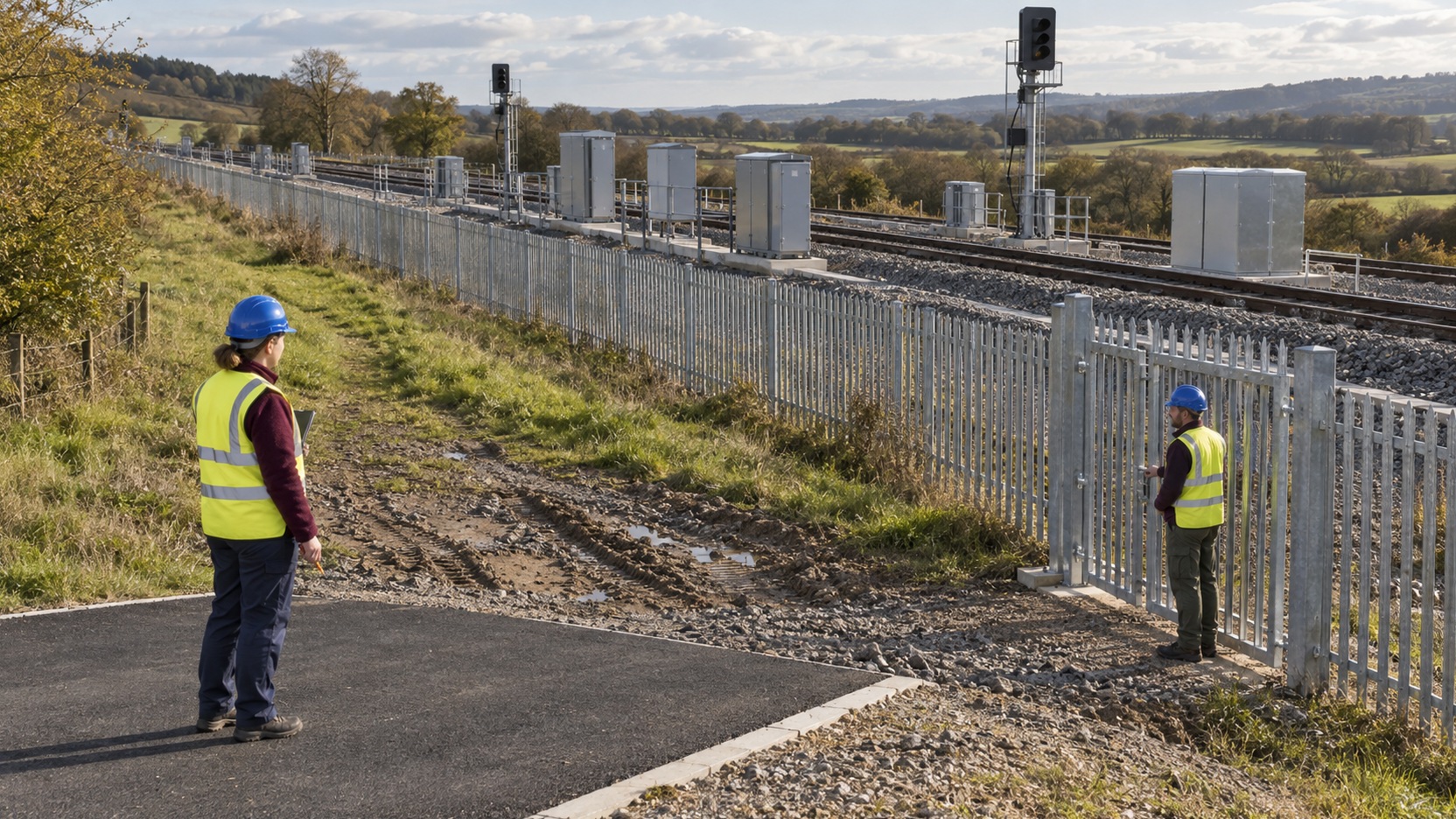
The other consequence was closer to home. The new equipment needed maintenance access at four points along the section, and a gate had gone into the boundary fence at each. At one of them the access road stopped about twenty metres short, on ground that had never been in anybody's scope, because the landowner negotiation had covered the gate and not the approach to it. The maintenance team found out on their first scheduled visit. It was resolved in six weeks, and it should never have existed, and it existed because the people who would operate the section had been consulted about the design and not about the access.
The pattern is ordinary enough. The project's own work was excellent, and the two things that settled what it was worth happened above it and below it.
For a PMP® candidate, the reading that helps is that a project sits inside something larger and owns only part of the chain. A project cancelled or deferred for reasons outside its control is not asking what the project manager did wrong; it is asking what they do now, and the answer usually involves an orderly closure and a record that lets the work be picked up later. A delivered thing that is not being used is asking about the operating end. Look up and down the chain before looking inside the project. A structured PMP exam preparation course builds that reading on situations where the project is performing well and the problem is elsewhere.
Audit where your relational time actually goes. Most project managers find that ninety per cent of it runs sideways. Two hours a month moved to the two ends, one conversation with somebody in the portfolio and one with the team who will operate the output, is a small reallocation, and it buys the two things a project cannot get any other way: warning, and adoption.
Interested in going further?
The two decisions that settle what a project was worth are usually taken by people the project manager rarely speaks to. Omega's PMP® Exam Preparation works through situations where the constraint sits above or below the project rather than inside it.
How projects sit inside an organisation's wider arrangements is described in the PMBOK® Guide Eighth Edition.
Ad · Amazon affiliate link.
References
A011: Project Success Is More Than On Time and On Budget
A012: Outputs, Outcomes, Benefits and Value: What’s the Difference?
A015: When Delivering the Scope Destroys the Value
A034: Think in Systems, Not Silos
A125: Budget vs Cost Baseline vs Funding
PMP and PMBOK are registered marks of the Project Management Institute, Inc.