Why Do Projects With Strong Reporting Still Go Off the Rails?
Ask most sponsors what reassures them and they will describe the same thing. A weekly report that arrives on time. A RAG status that has been green for months. A steering group where nobody raises their voice. By every visible measure, the project looks well run.
Then, somewhere between month four and month eight, it collapses. Not always dramatically. Sometimes it just quietly slips six months, or the budget doubles, or the thing that gets delivered isn't quite the thing anyone actually needed. And the strange part is that nobody can point to a moment where the reporting told them this was coming. The reports were accurate, technically. They just weren't telling anyone the truth.
This isn't a story about dishonest project managers, though that does happen. Most of the time, the people writing these reports believe every word of them. The problem sits one level deeper, in what a status report is actually built to capture.
A status report measures progress against a plan. It answers a narrow, mechanical question: are the tasks that were scheduled to happen, happening on the dates they were scheduled for. That's a genuinely useful question and it deserves to be answered honestly every week. But it isn't the same question as whether the project is healthy. A team can hit every milestone on the plan and still be building the wrong thing, or building it in a way that's quietly accumulating risk that hasn't surfaced yet, or held together by two or three people working unsustainable hours to keep the dashboard looking calm.
None of that shows up in a RAG rating, because a RAG rating was never designed to capture it. It was designed to compress a complicated situation into a colour a sponsor can glance at in a five minute agenda slot. Compression is the whole point of it. But something gets lost every time you compress, and what usually gets lost first is judgement. The report tells you where the project is against the plan. It very rarely tells you what the person writing it actually thinks, in their own honest assessment, about whether that plan is still the right one.
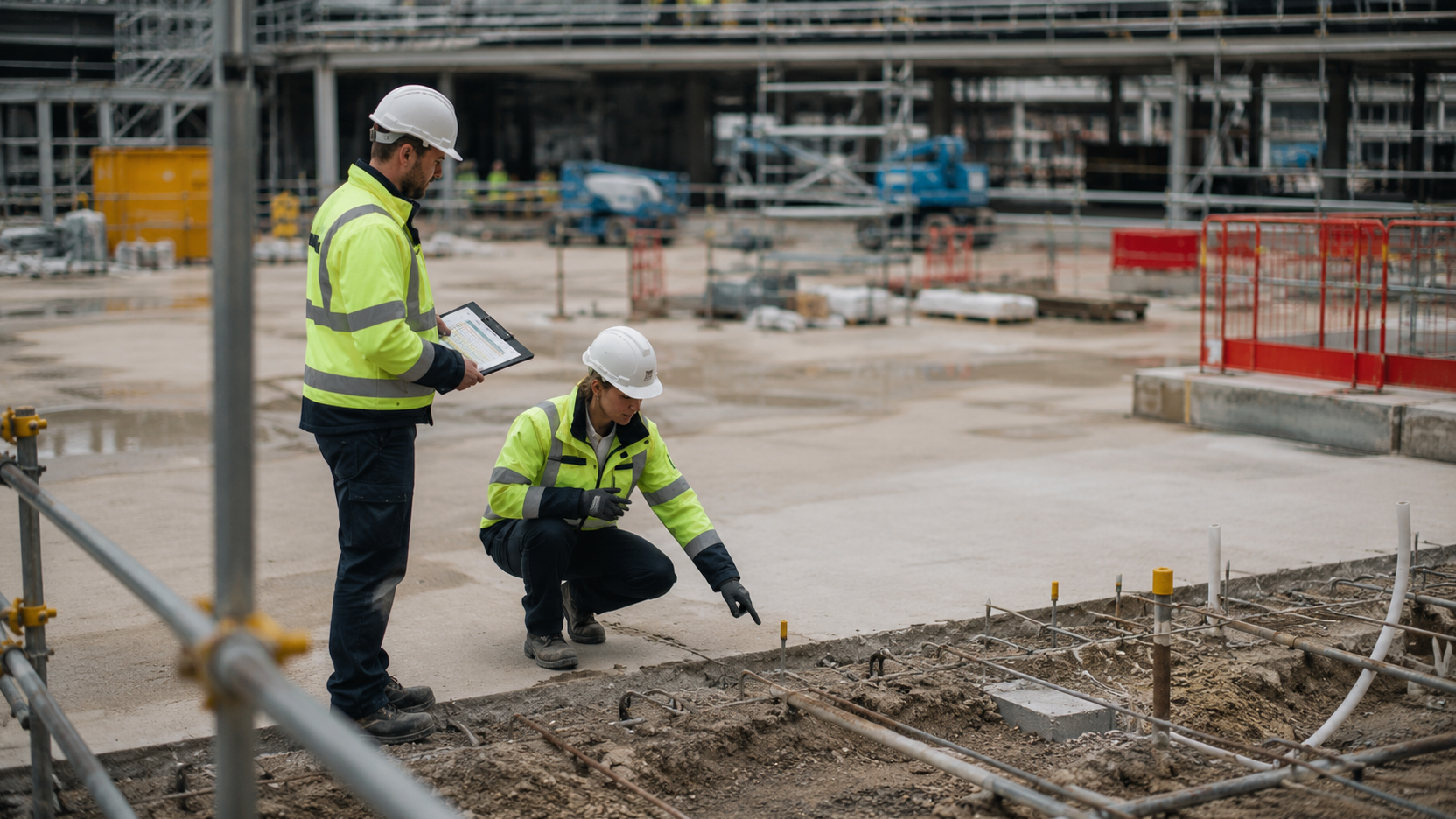
Consider a fairly ordinary infrastructure project, the kind that runs in the background of most large organisations. Six months in, the weekly reports have all shown green. Schedule on track, budget within tolerance, no open risks rated above medium. The steering group has stopped asking hard questions, because there's been nothing to ask about. Then the delivery lead walks the site with a newly appointed technical assurance reviewer, someone brought in for an unrelated audit. Within twenty minutes it's obvious that a section marked complete three weeks earlier is nowhere close, that the subcontractor doing the work has been quietly absorbing a design change nobody escalated, and that two team members have known this for a fortnight and said nothing in the reports because there was, technically, still time to fix it before the next milestone. Nobody lied. Everyone believed the plan could still be rescued. The report just never had a field for "I'm worried, and here's why," so that judgement stayed in someone's head instead of in the paperwork the sponsor was actually reading.
This is where governance and reporting quietly diverge, even though people tend to use the words interchangeably. Reporting is a mechanism. Governance is a set of behaviours: escalating early, testing assumptions out loud, giving the people closest to the work permission to say something is wrong before it becomes a crisis. You can have excellent reporting sitting on top of weak governance for a surprisingly long time. The dashboard keeps producing clean, defensible, on-time numbers, right up until the moment the gap between the paperwork and the reality becomes too large to compress into a colour any more.
The practical fix isn't a better template. Teams that avoid this trap tend to build one specific habit into their governance rather than their reporting: a standing, low-stakes way for the person closest to the work to flag a concern before it has hardened into a formal risk. Not a red rating, which feels like an alarm and gets treated like one. Something quieter. A line in the steering pack for "watching," distinct from "on track" and distinct from "at risk," that exists specifically to hold the things people suspect but can't yet prove. It sounds like a small addition. In practice it's the difference between a sponsor finding out in week six or finding out in week eighteen.
Strong reporting is worth having. It just isn't the same thing as a healthy project, and mistaking one for the other is how confident, well-documented projects end up going off the rails in front of people who genuinely thought they were watching closely. If you're looking at how to build that kind of judgement into your own governance rather than just your paperwork, get in touch about your project management training options.
Andre Malowney is a project management trainer accredited across PMI, APMG, APM and PeopleCert frameworks, working with both traditional plan-driven practitioners and Agile delivery teams. Find him on LinkedIn: www.linkedin.com/in/andremalowney.